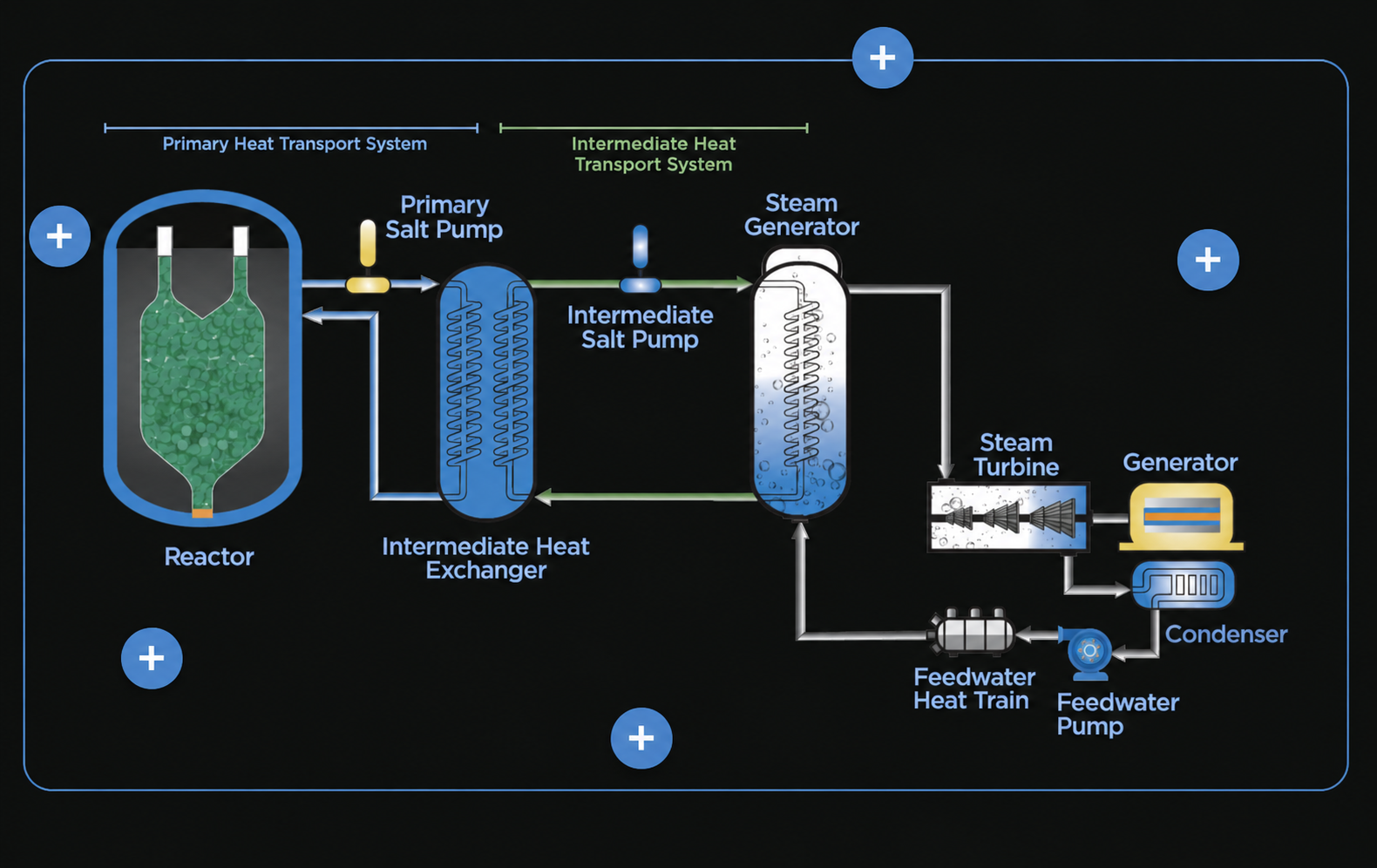
Kairos Power is innovating the future by delivering a salt-cooled high-temperature nuclear reactor. During my Test Engineering internship, I completed an in-depth two-phase flow analysis on the molten salt coolant.

Non-Disclosure Agreement: I will only disclose non-proprietary information regarding my work at Kairos Power. All images are public knowledge.
Enabling the world's clean energy transition to improve people's quality of life while protecting the environment.
Kairos Power is innovating the future by delivering a salt-cooled high-temperature nuclear reactor. During my Test Engineering internship, I completed an in-depth two-phase flow analysis on the molten salt coolant.
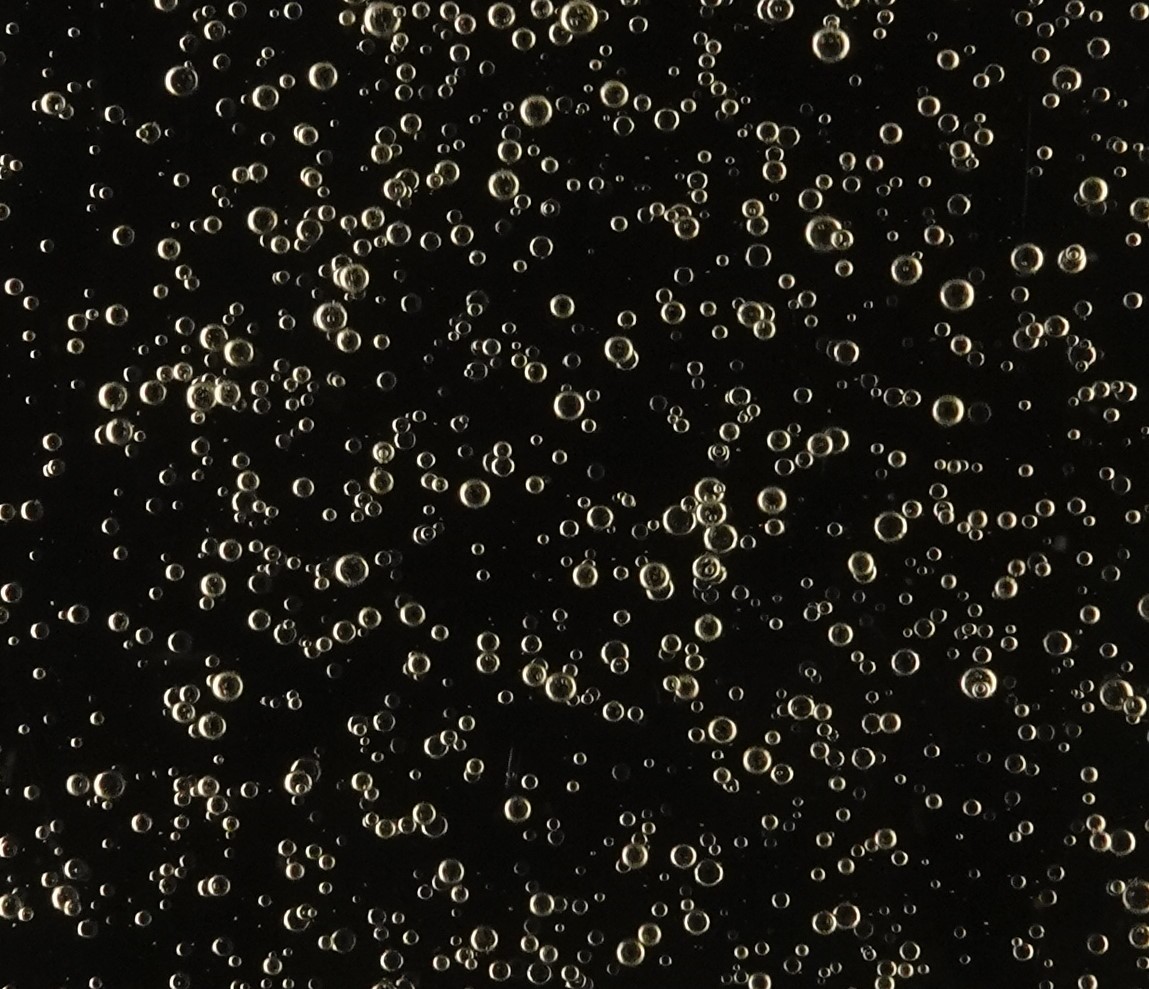
A key parameter for flow characterization is void fraction percentage: the ratio of air to volume. A larger void fraction will decrease the heat transfer coefficient of molten salt, degrading the coolant's ability to remove heat from the fuel rods.
The Nuclear Regulatory Commission (NRC) requires a limit on the amount of void fraction present in the coolant. It was my job to develop a method to infer the void fraction within the coolant of Kairos Power's Hermes Test Unit Reactor.
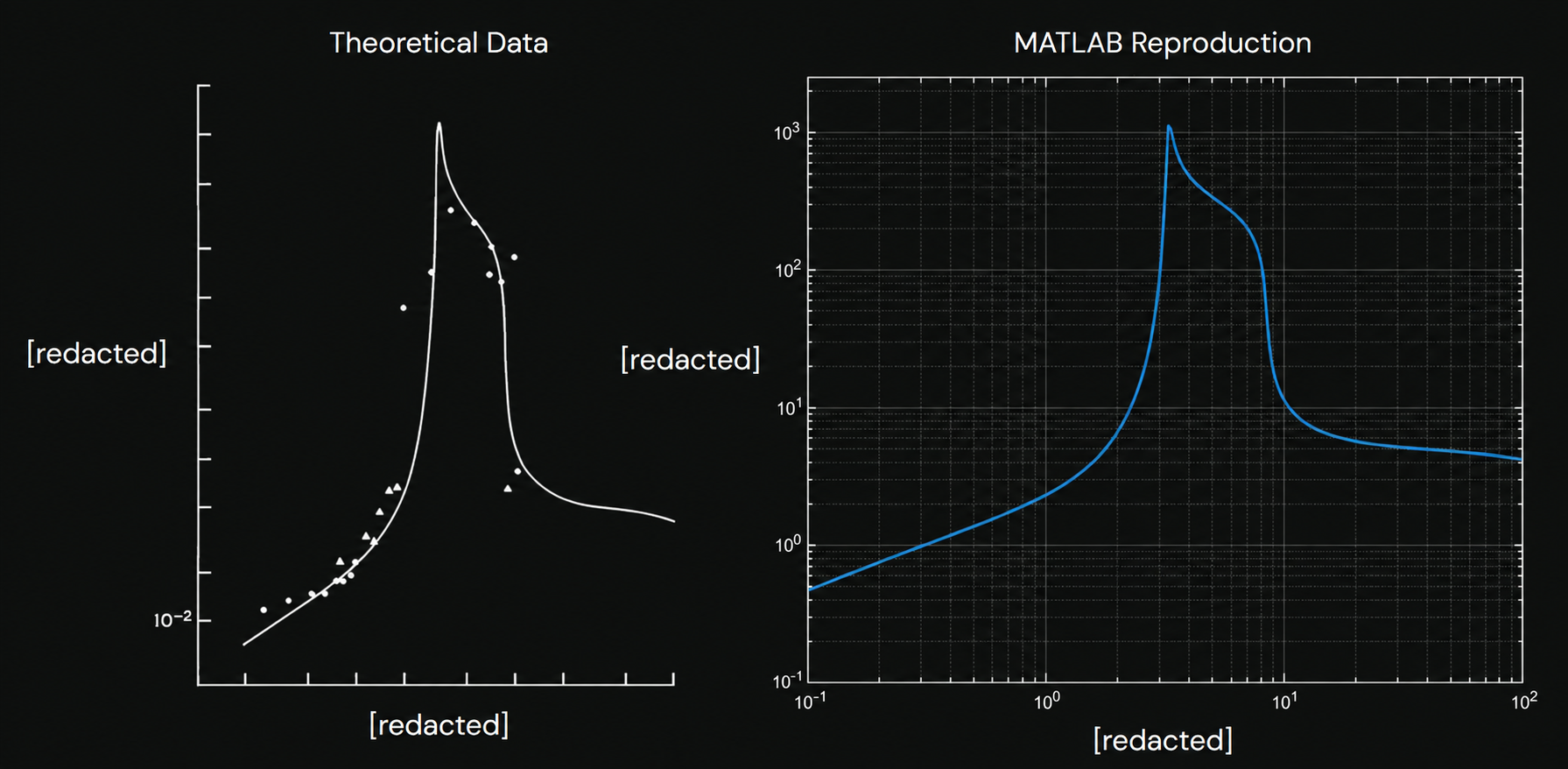
Pictured left, I replicated methods from a verified source to predict two-phase flow behavior with non-fluid properties. The replication was accurate, and therefore I could apply such methods in the context of my experiment.
I had a theoretical method to infer the void fraction, but I needed to validate it...
For validation of the theoretical calculation, I created an experimental setup that I could physically extract the void fraction data from.
Doing a test with water allowed me to visualize the flow and take pictures to get the true void fraction parameters of this experiment. I performed calculations to map the experimental data of water back to the conditions of molten salt.
To simulate the coolant pipes, I generated the void fraction in a tube, but surrounded it with a rectangular prism of water to reduce light refraction. It was a challenge to make the large assembly completely watertight.
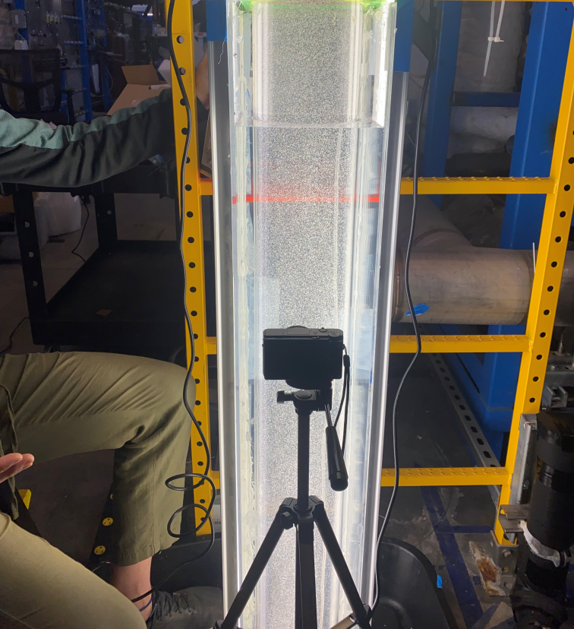
Once I had taken the photos, I used an image processing software to determine key characteristics of the flow. I could then use this data, correlated with additional non-fluid properties, to validate the prediction that was made with the model that I adapted.
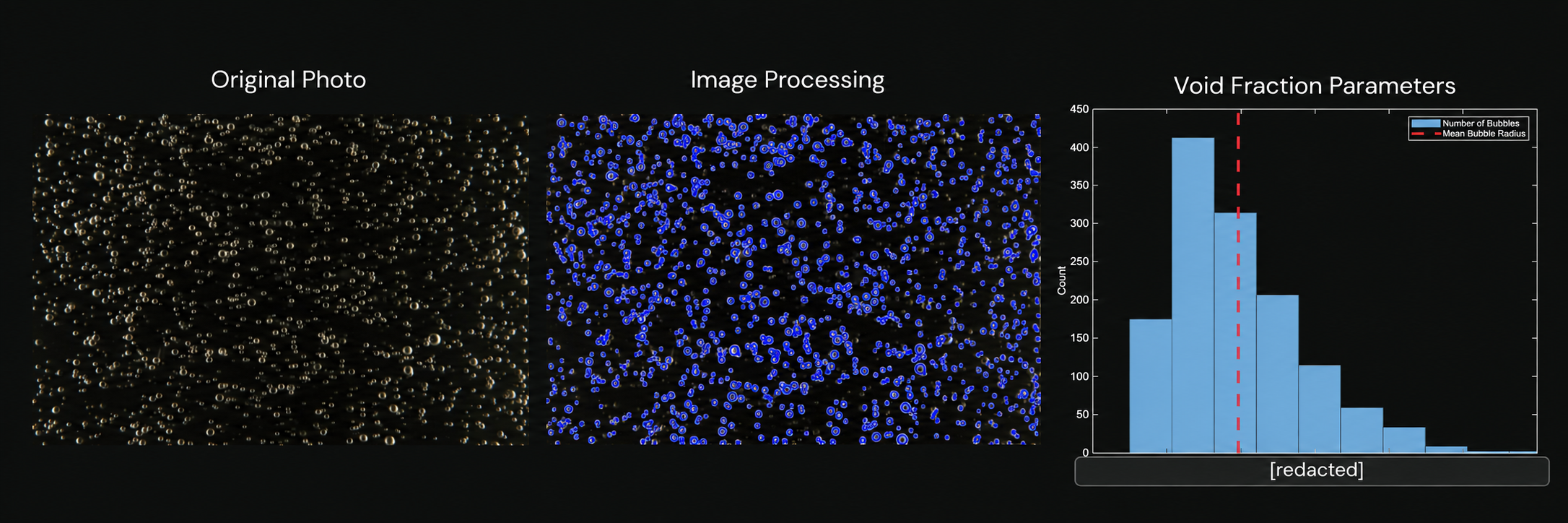
For the final step, I computed the error between the theoretical model and experimental data to find the most likely case of parameters. I could compare these results to other sets of data to predict the two parameters relating to void fraction.
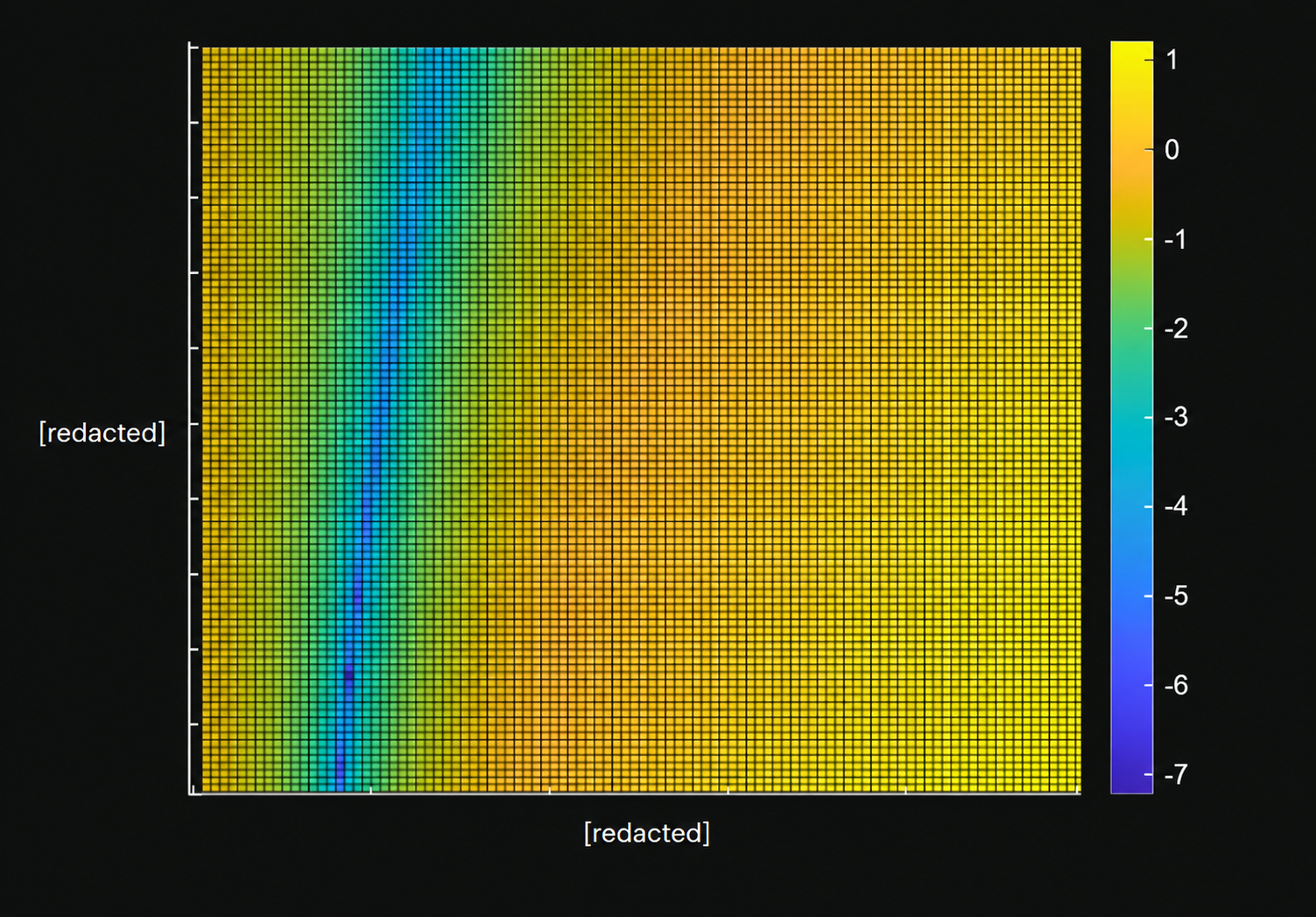
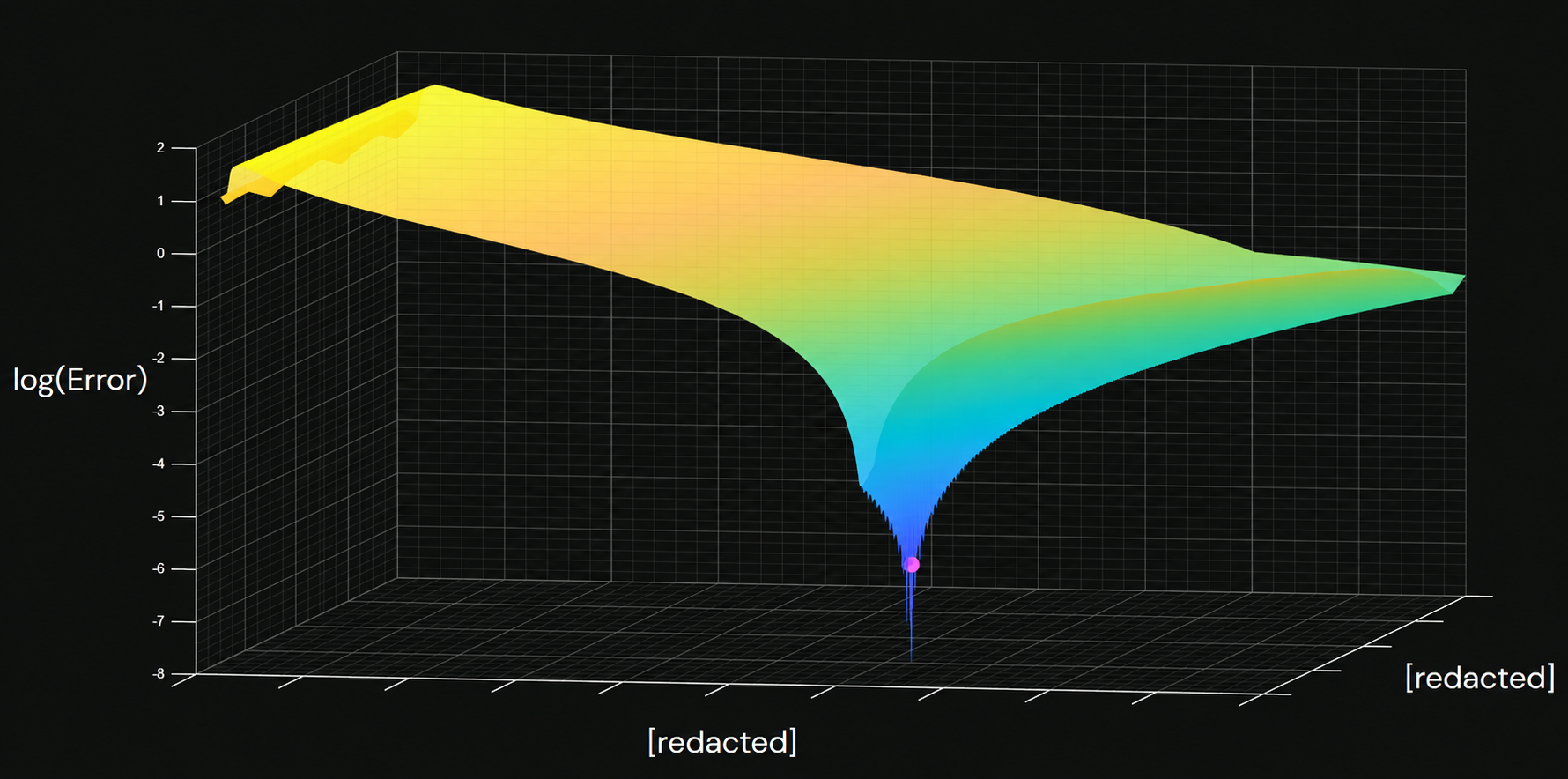
Void fraction presence is undesirable in molten salt coolant, but is unavoidable due to gas entrainment and argon gas entering through a free-surface vortex in the pump. I developed a method to predict whether or not the void fraction is at a concerning percentage, leaving a detailed description of my work for the team to implement, test, and improve upon the model.